
FINDING FIBONACCI - ELIZABETH GOWER
This series of photographs of stencilled numbers on Venetian buildings, was accumulated during an extended stay in the city in 2017.
The selected numbers follow the Fibonacci sequence (named after 13th century Italian mathematician Leonardo Fibonacci of Pisa), in which each number is the sum of the two preceding numbers, (for example: 0, 1, 1, 2, 3, 5, 8, 13, 21, 34, 55, 89, 144, 233, 377, 610, 987, 1597, 2584, 4181, 6765…).
Venice is famously a labyrinthine city with a dense network of 3,000 narrow intersecting walkways, 400 bridges and 176 canals that converge and disperse from numerous campos and piazzas, all within a relatively small area. It can be disorientating and result in unknowingly walking in circles.
Standardised black or red numbers stencilled onto a white oval or rectangle uniformly appear on every building throughout Venice. These repetitive markers counteract the sensory overload that the maze-like ‘floating city’ generates.
The numbering system, however, is not necessarily successive, and is determined by the perimeters of city’s six sestieri (districts). For each sestiere, a starting point was chosen then the numbers spiral and snake out from that point. They do not stop at the end of a street but continue to meander throughout the entire sestiere sometimes running into the thousands.
Searching for the Fibonacci numbers within this maze-like network began as a spontaneous game but subsequently developed into a purposeful challenge to collect a complete sequence.
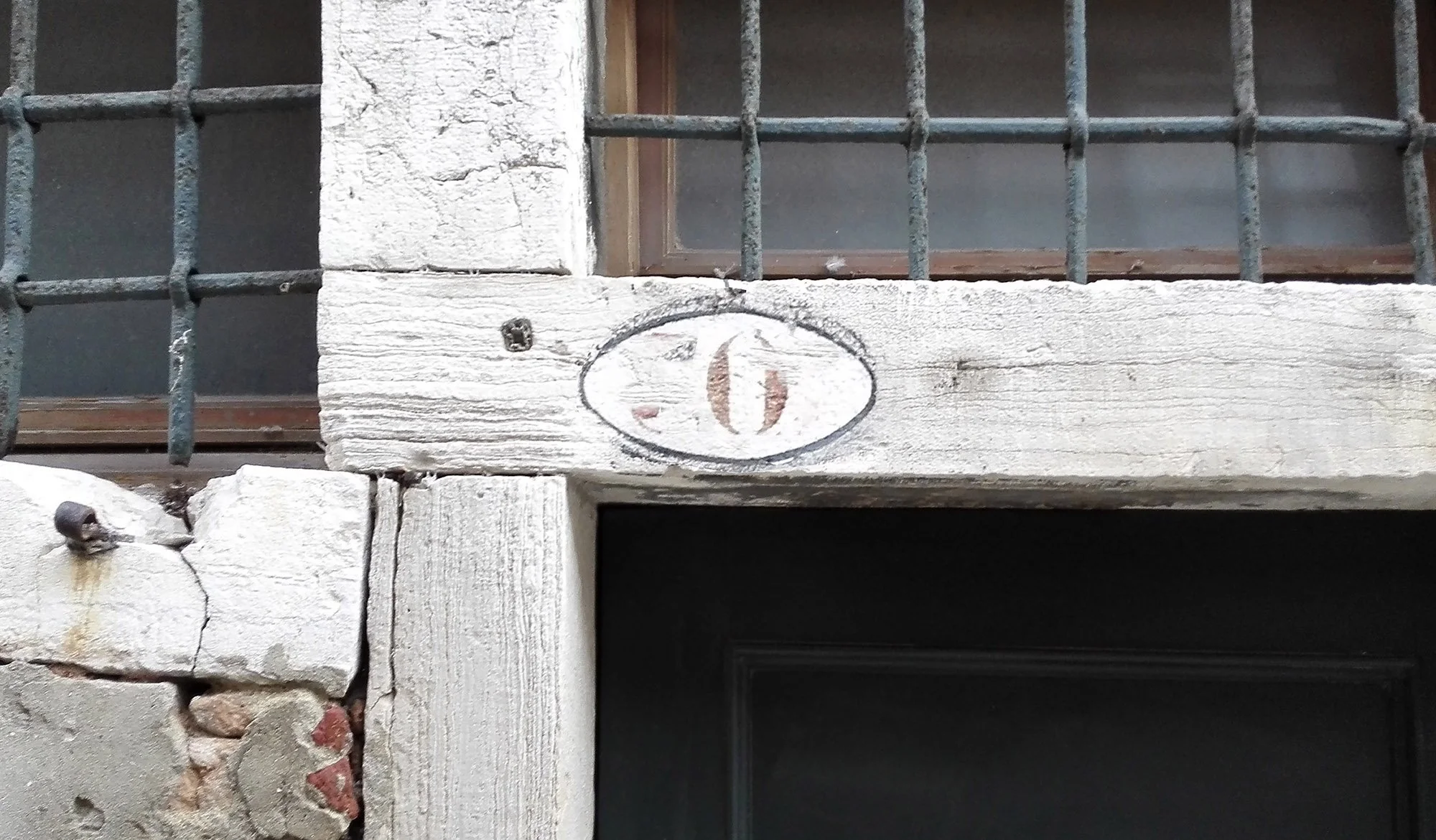
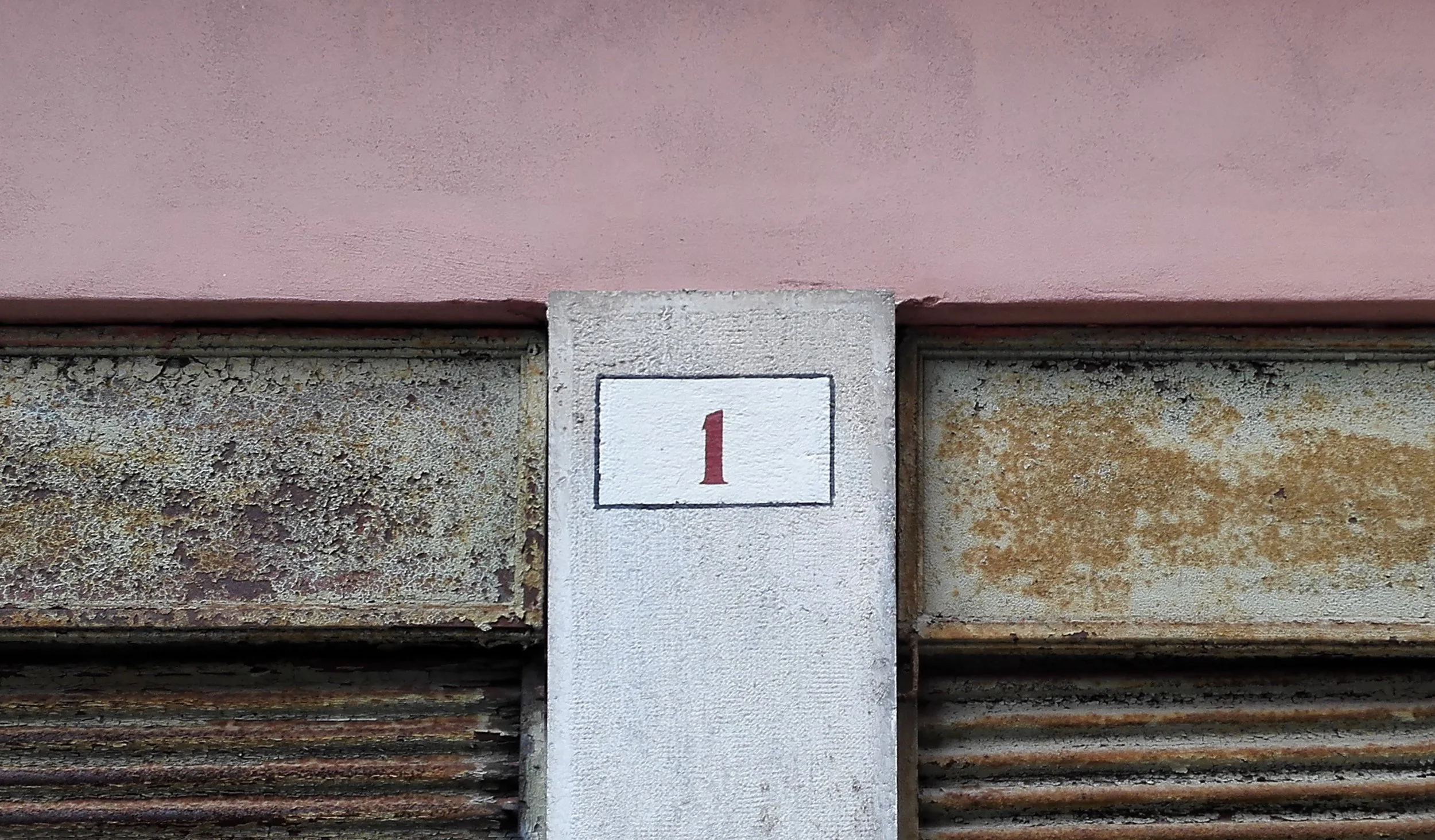
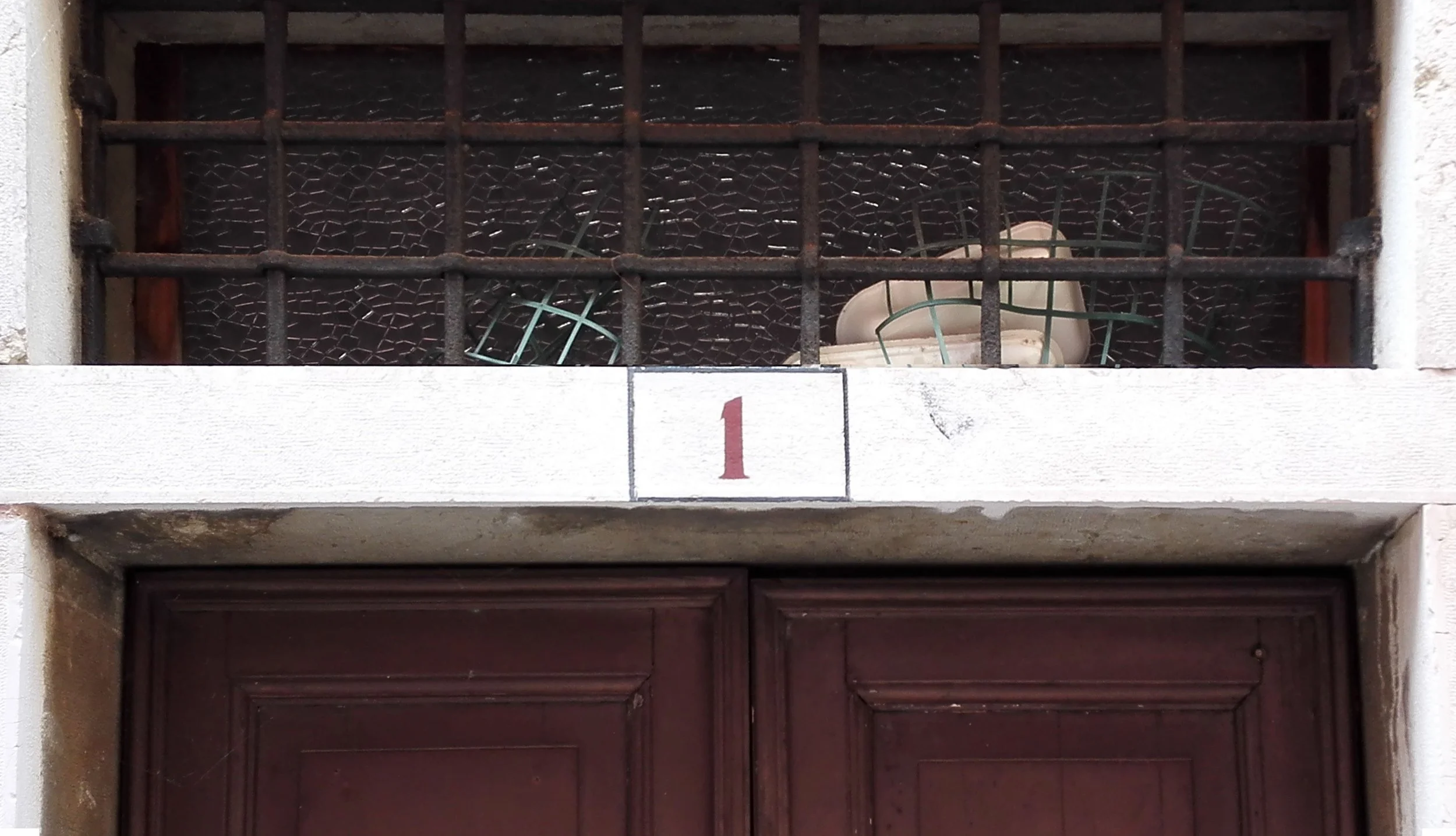
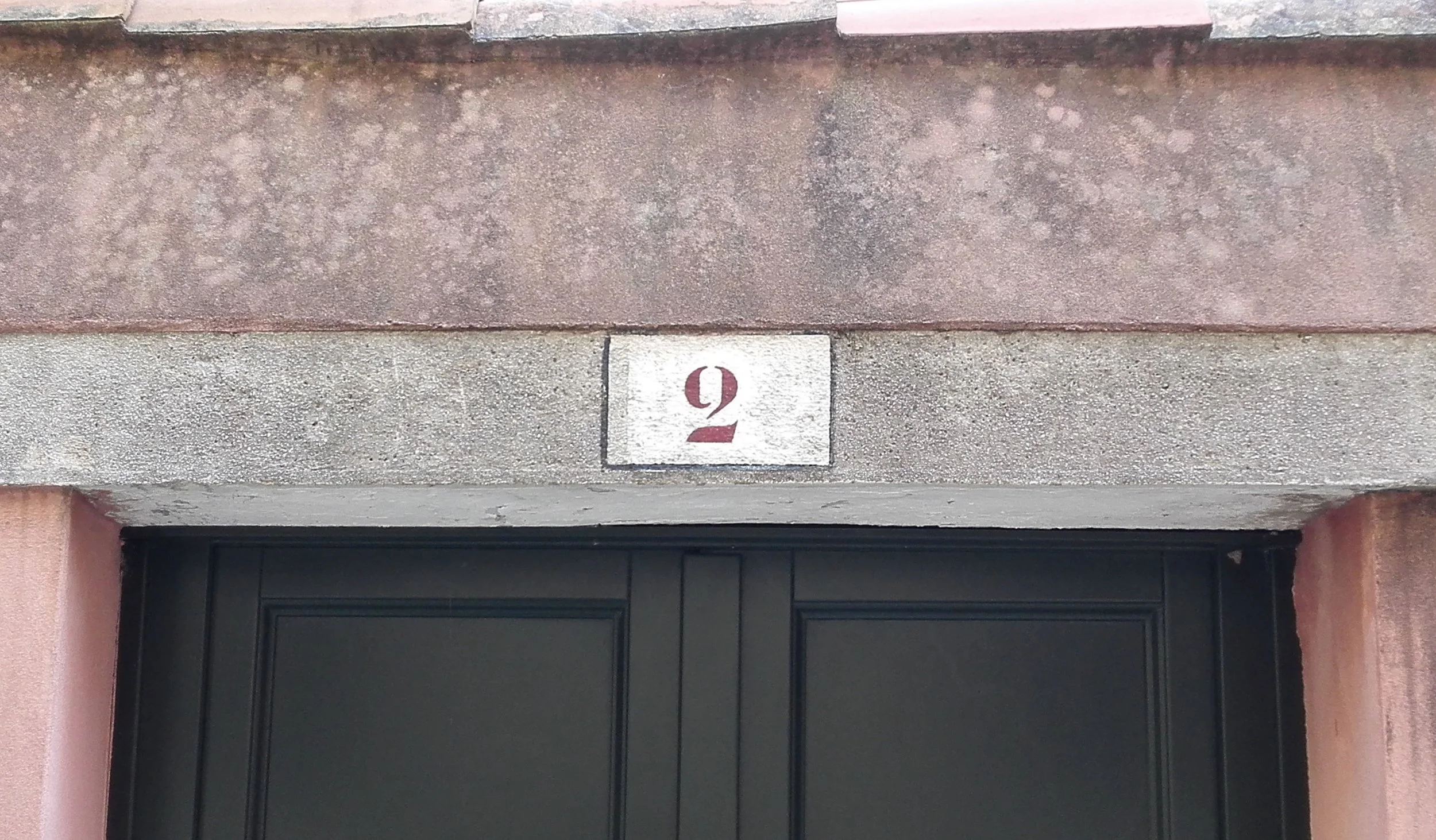
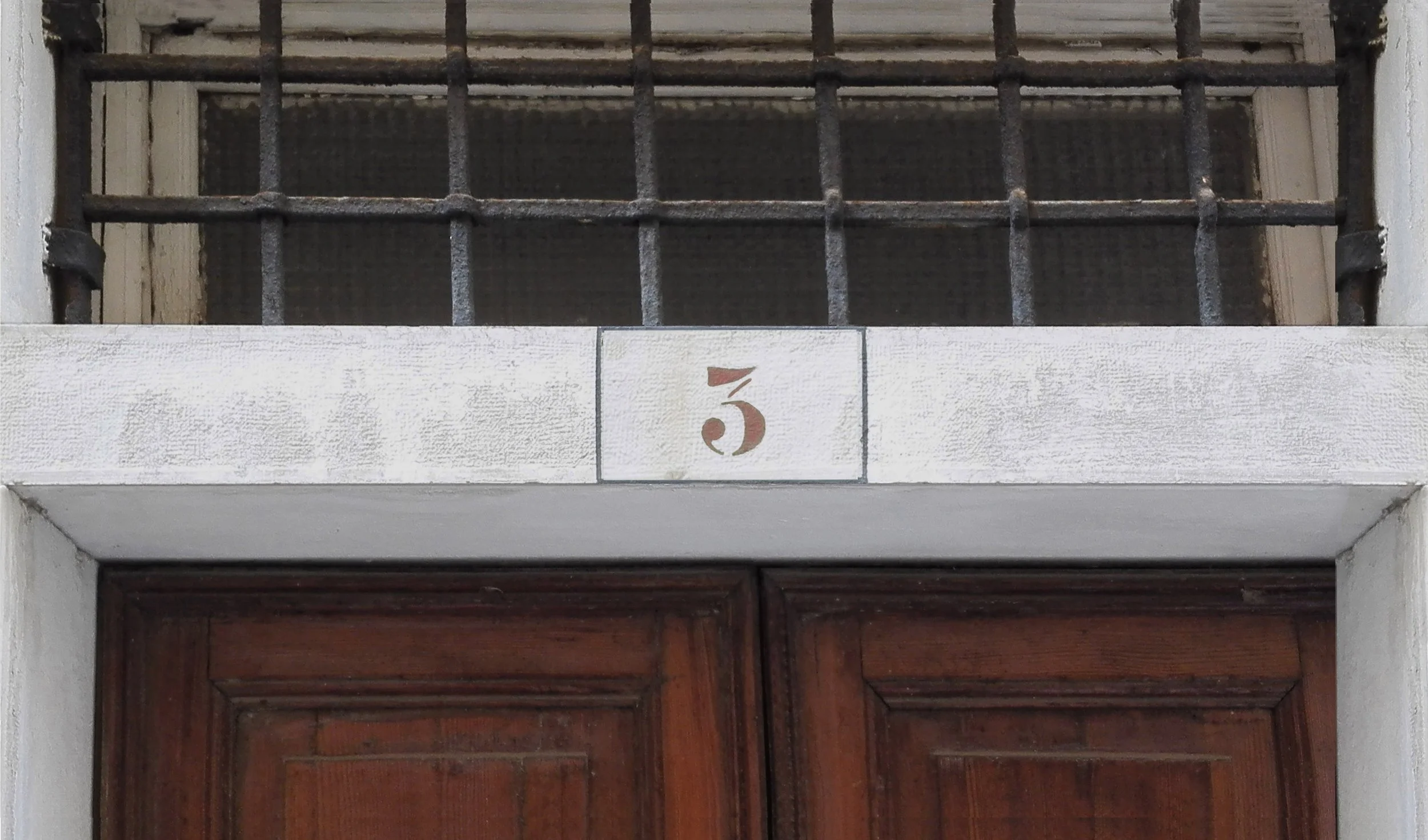
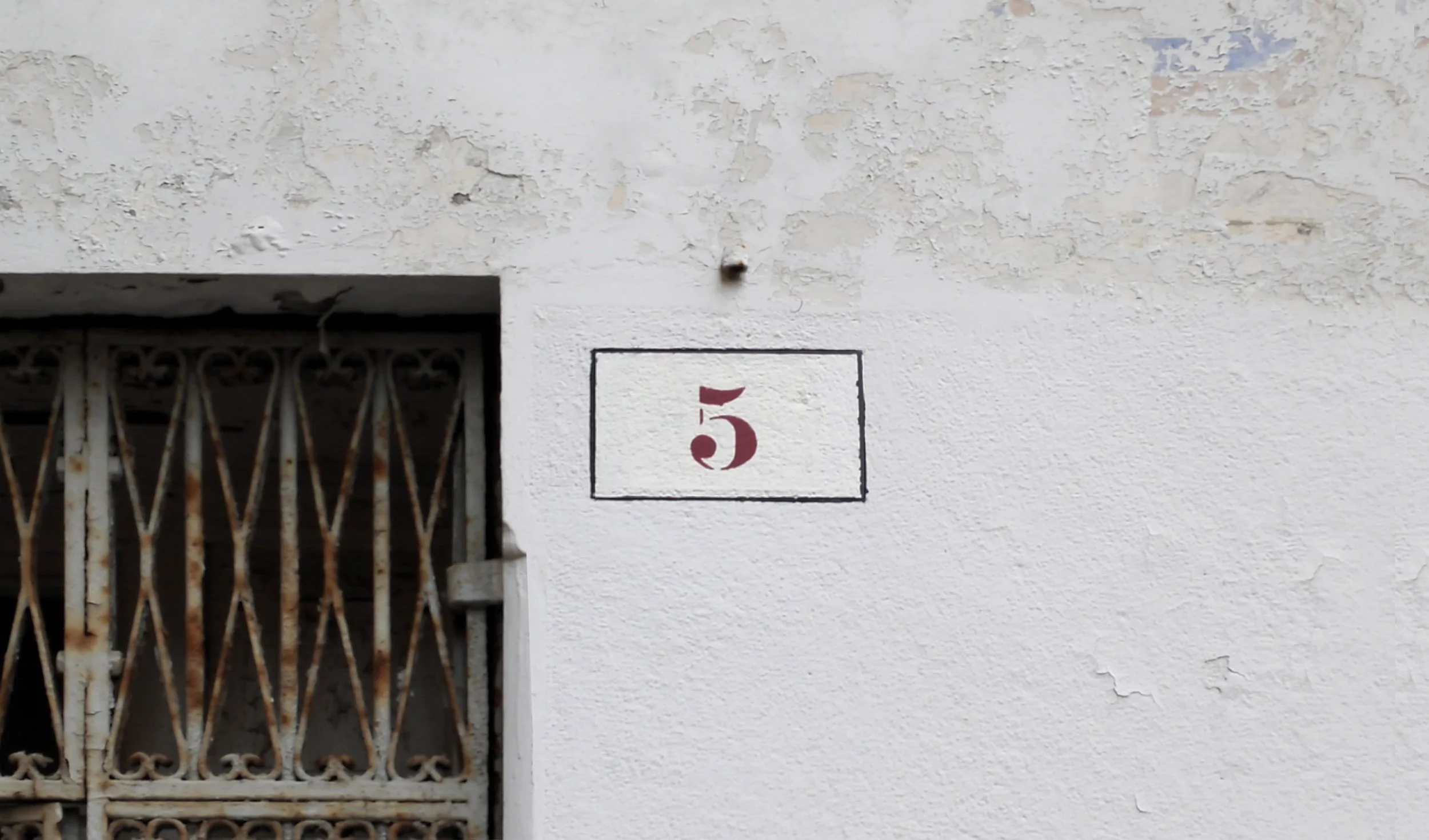
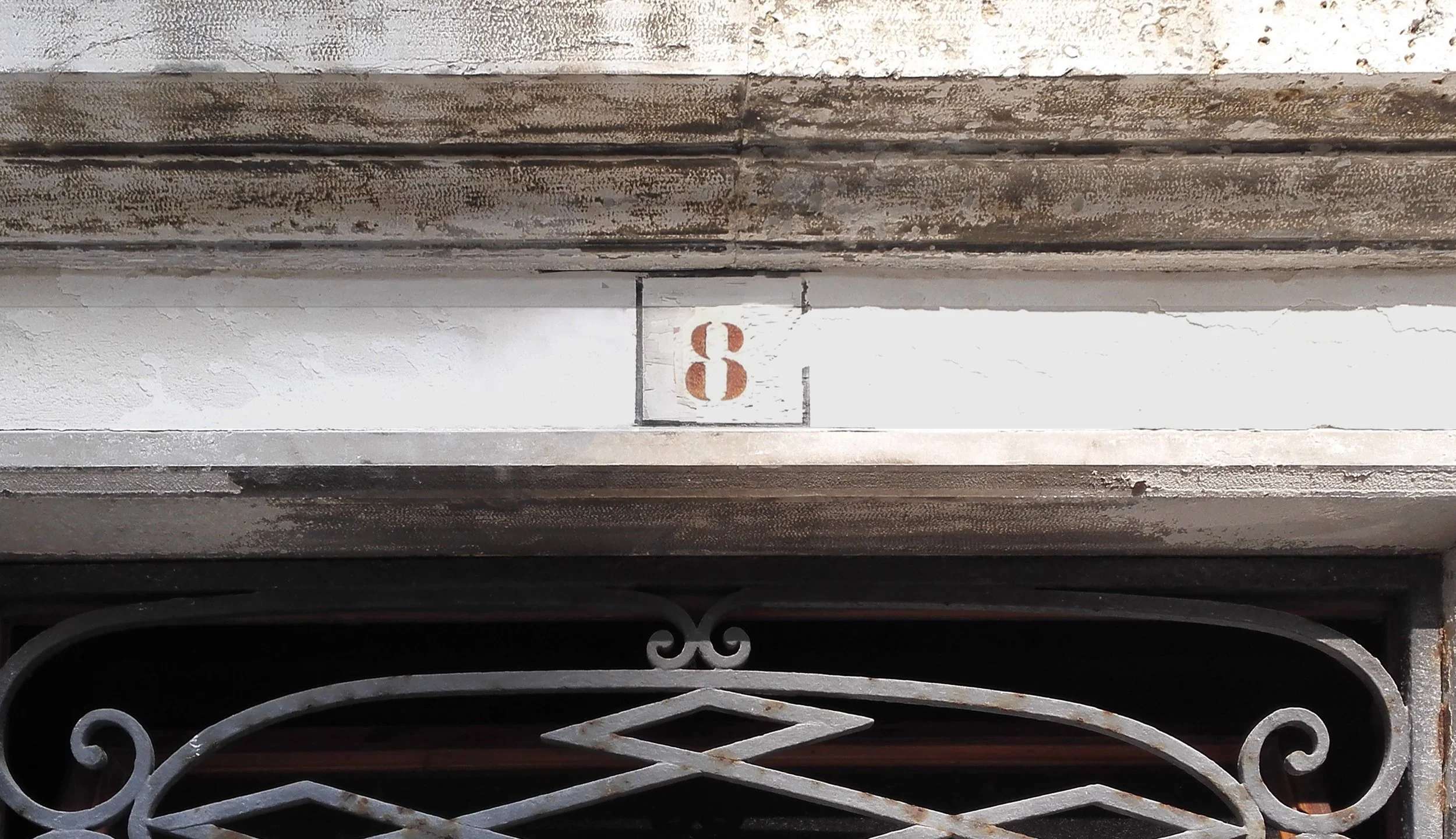
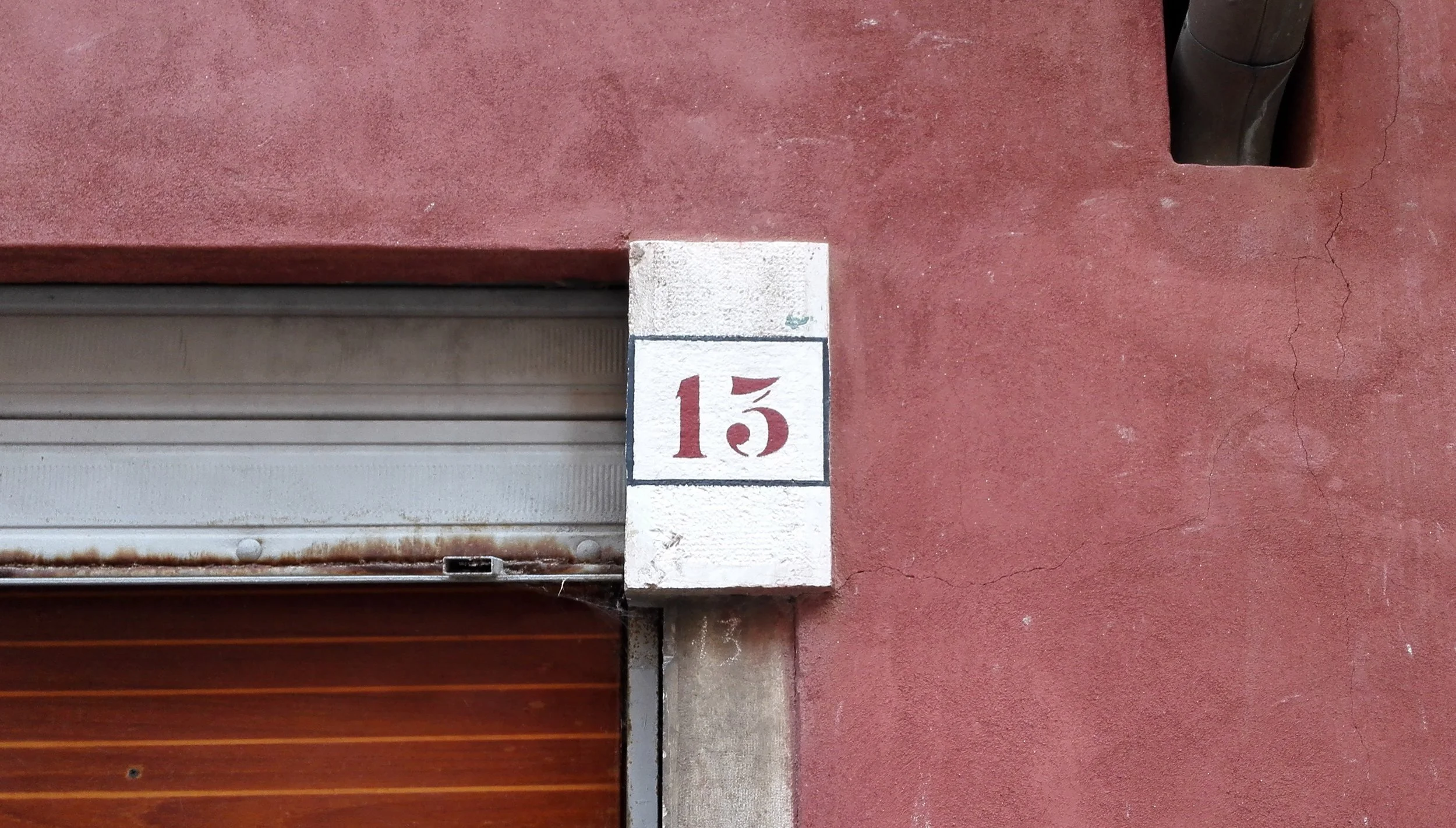
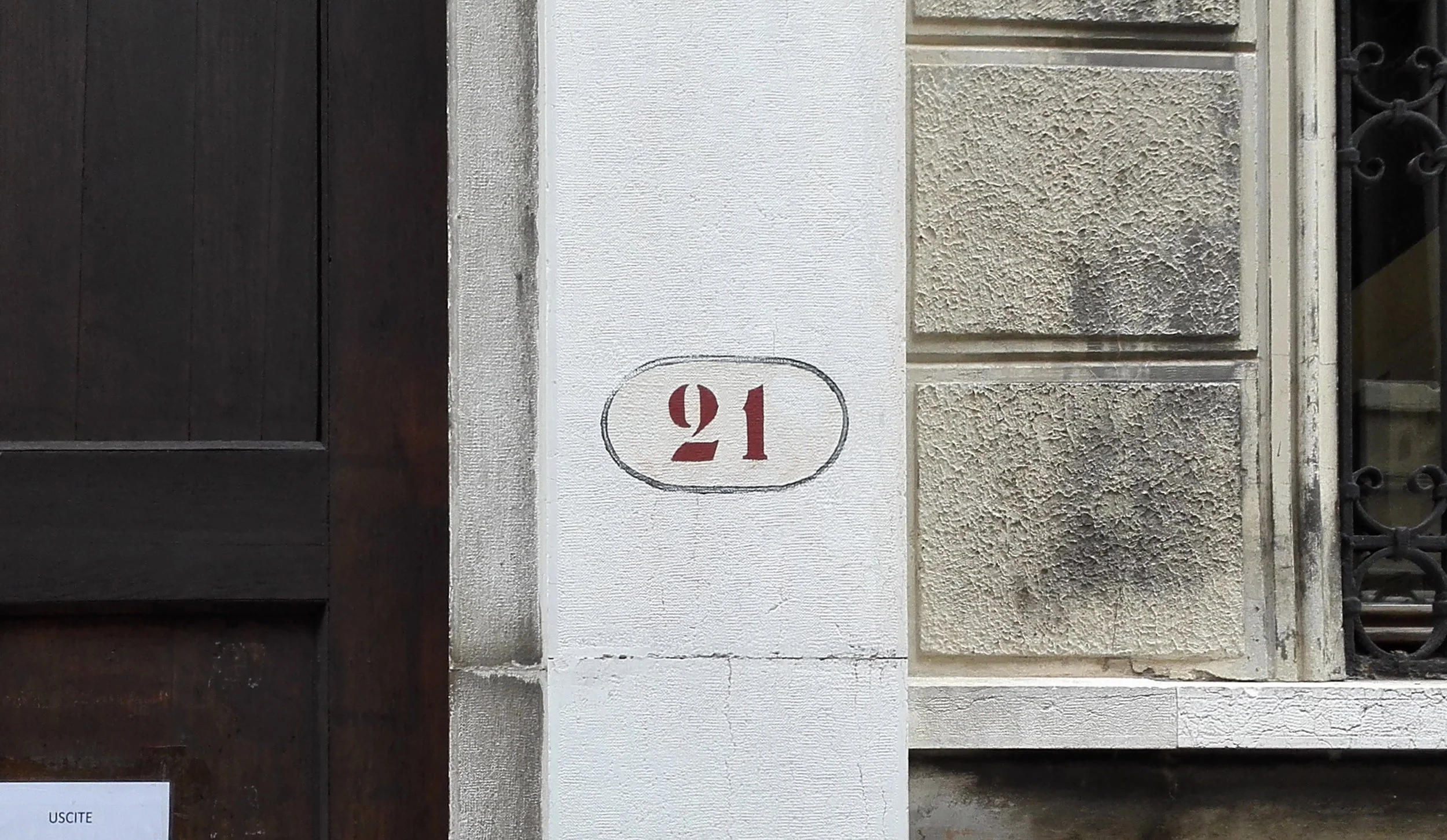
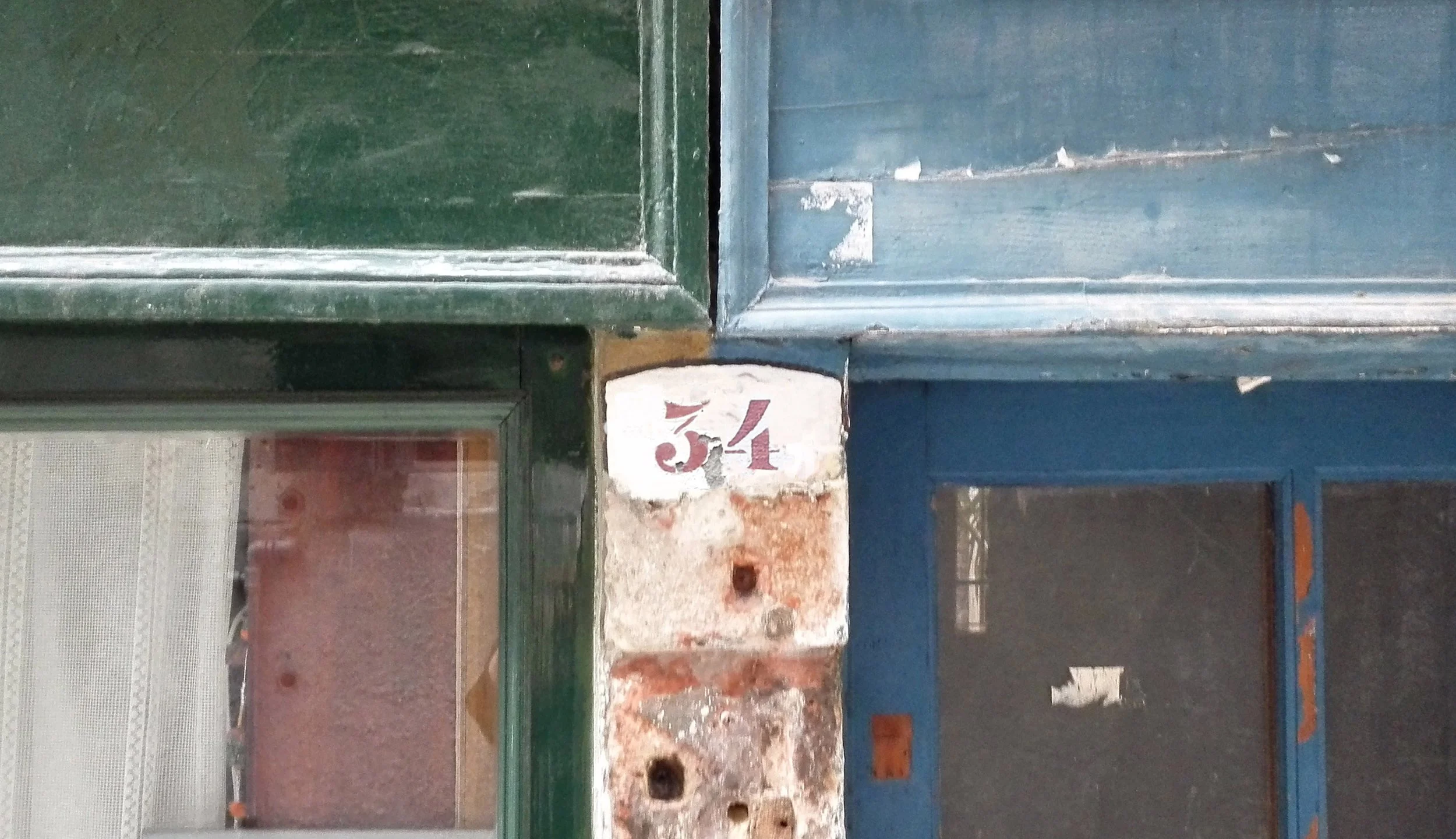
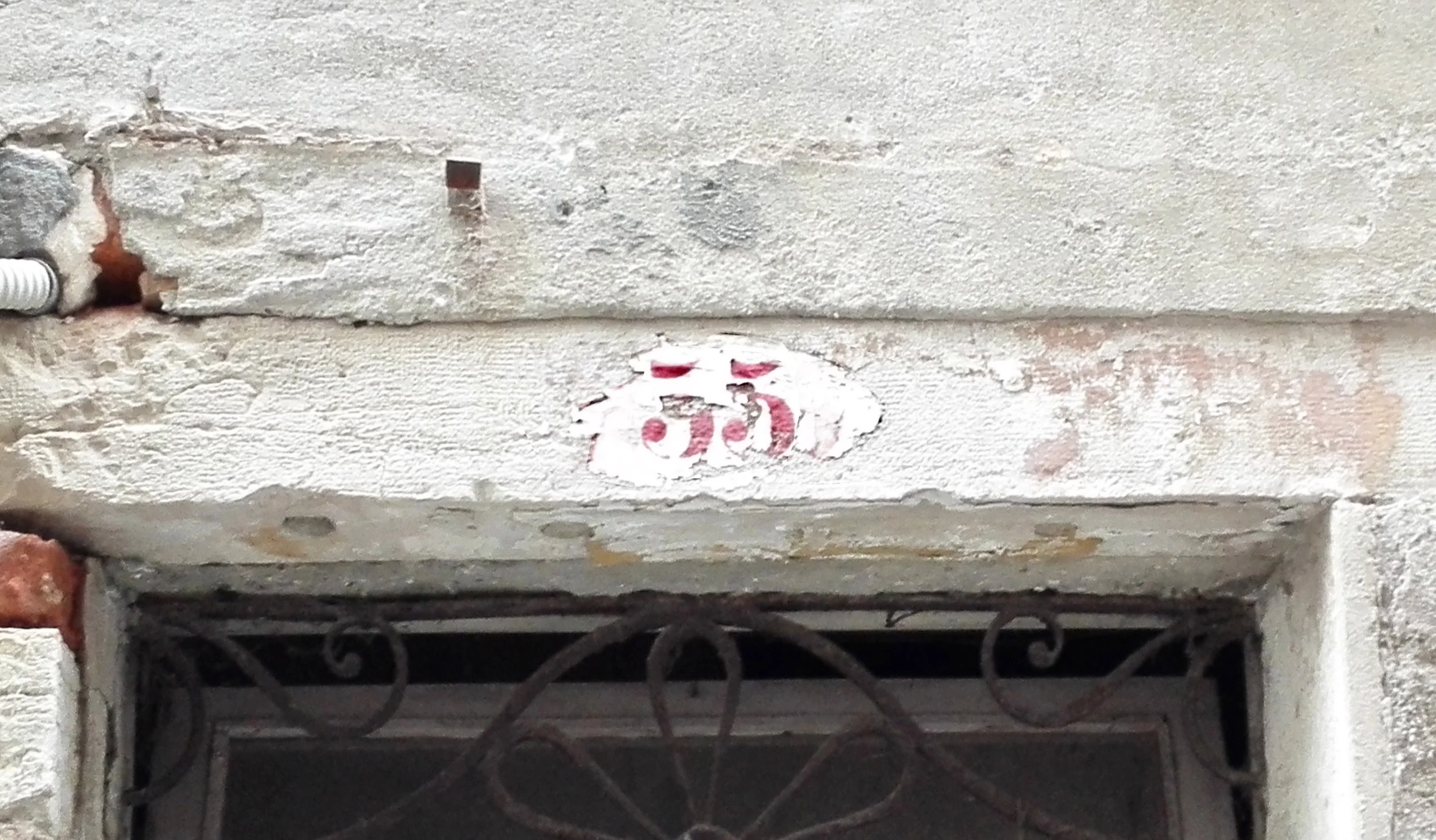
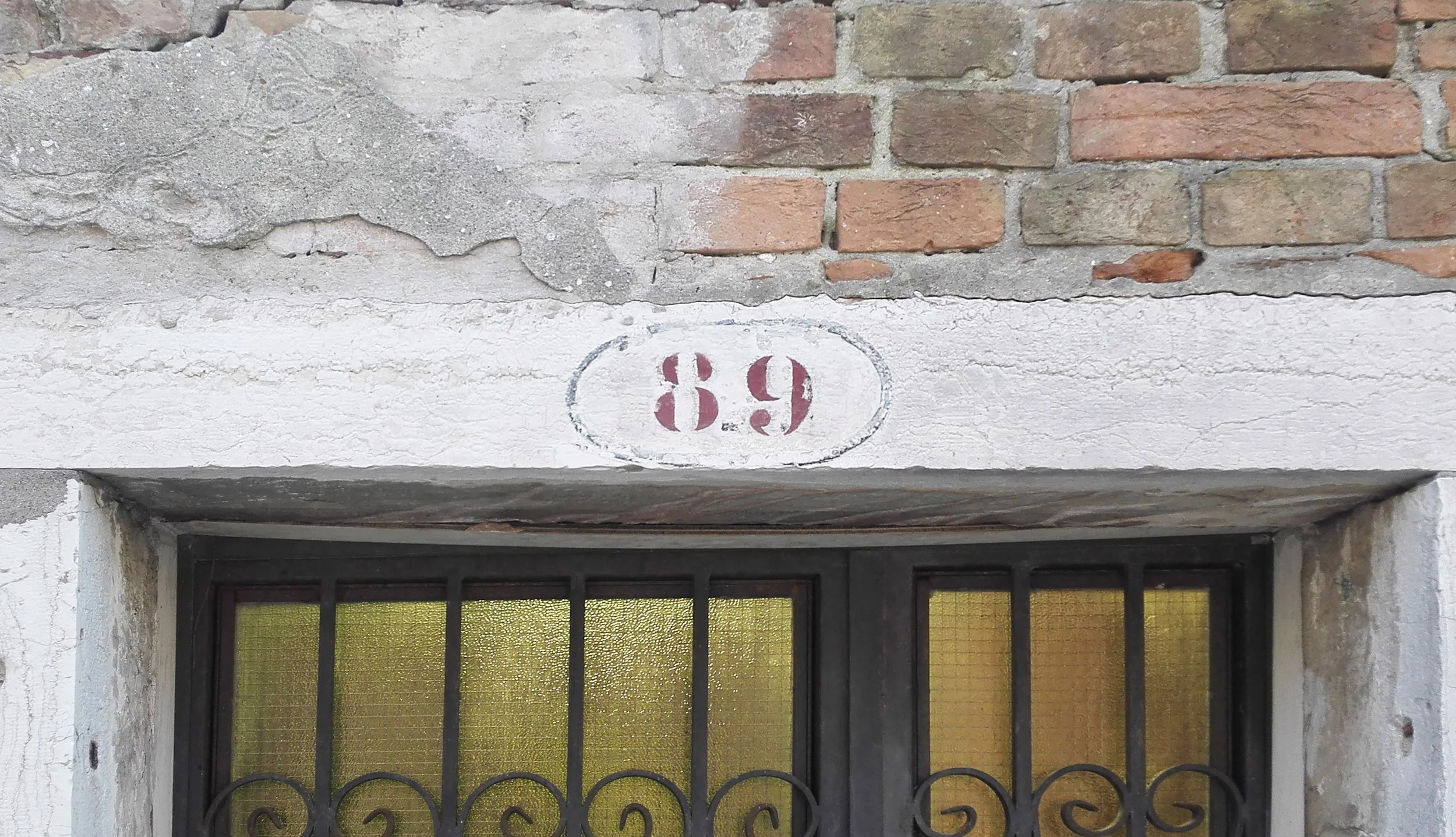
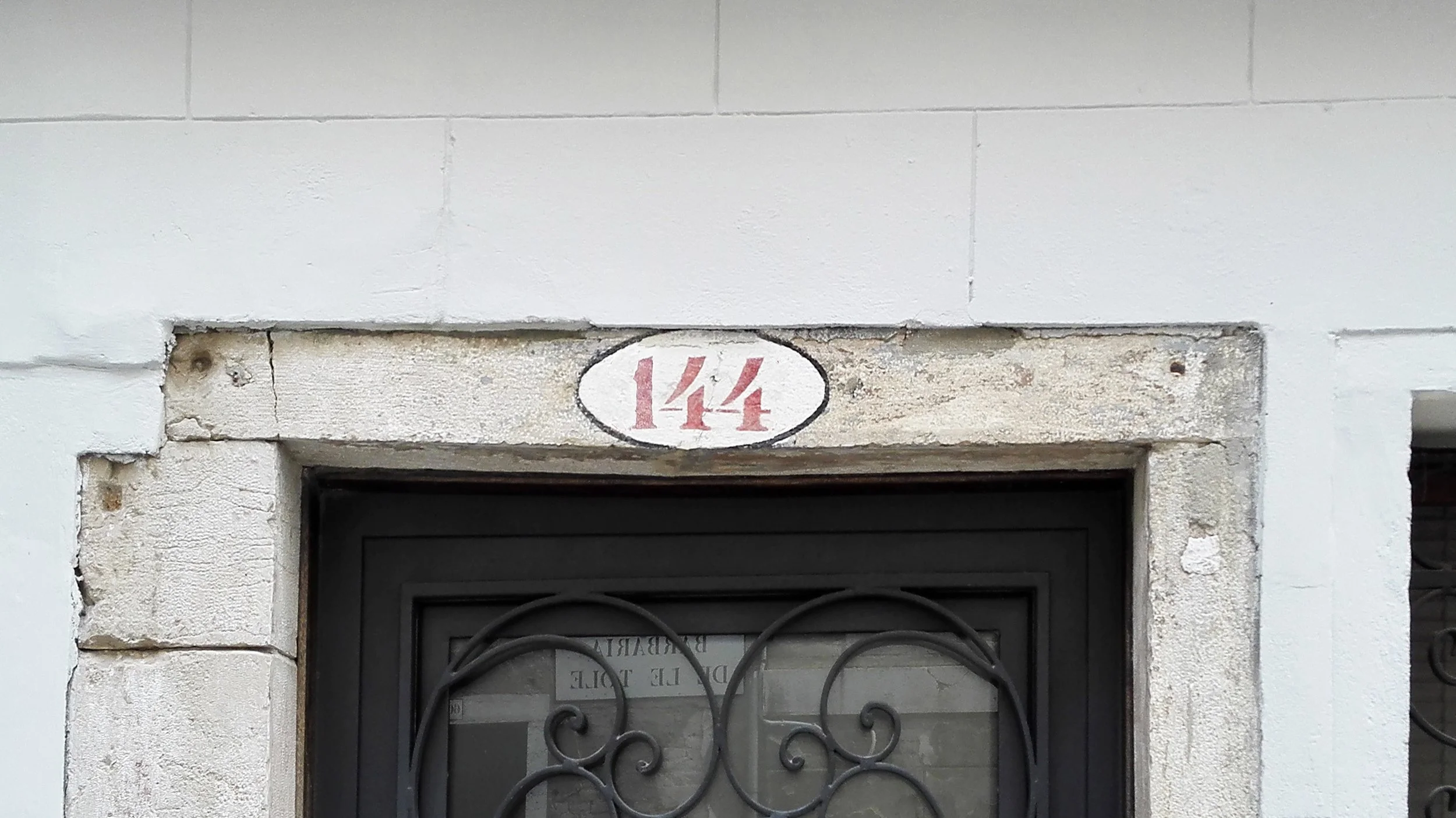
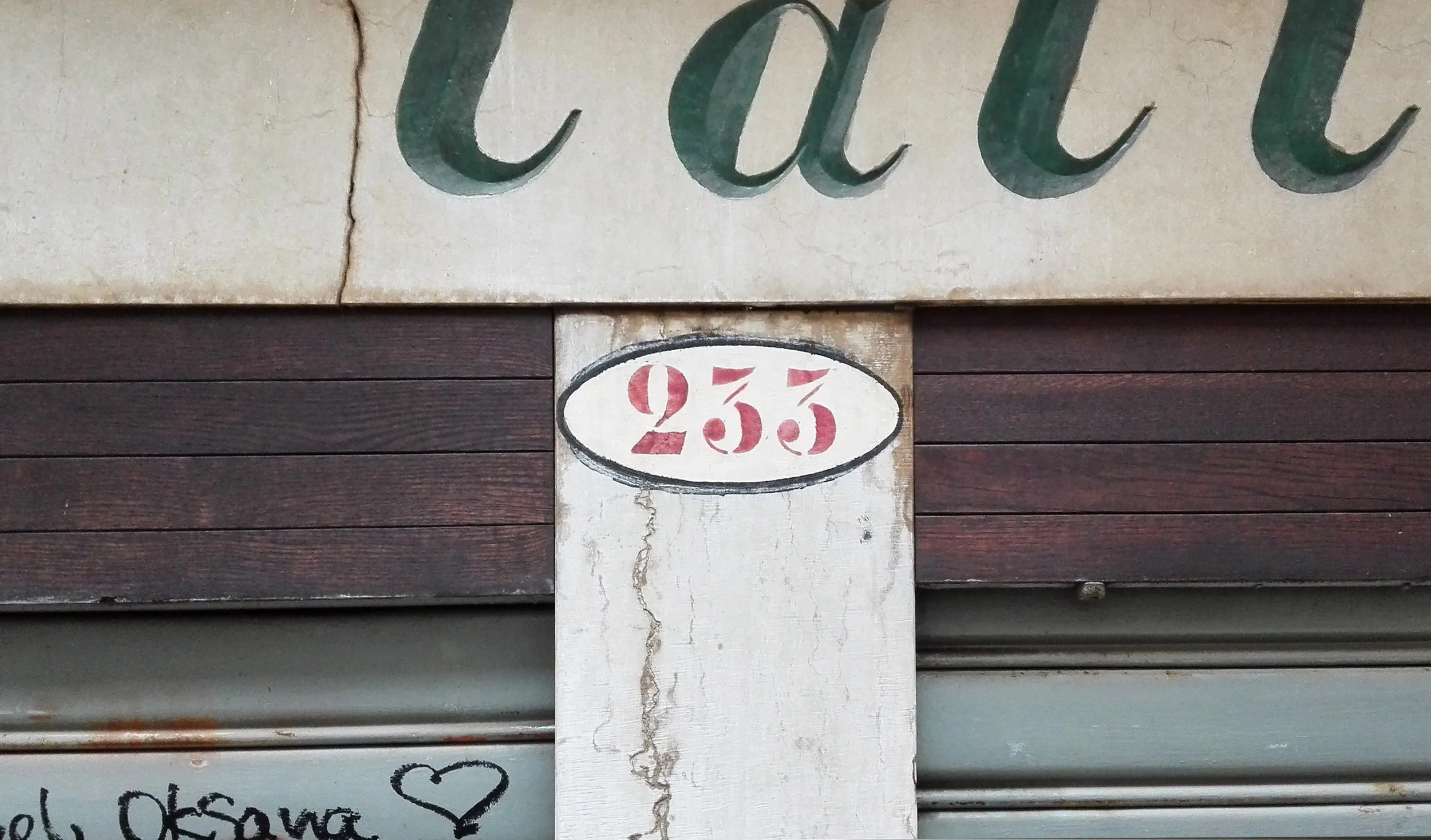
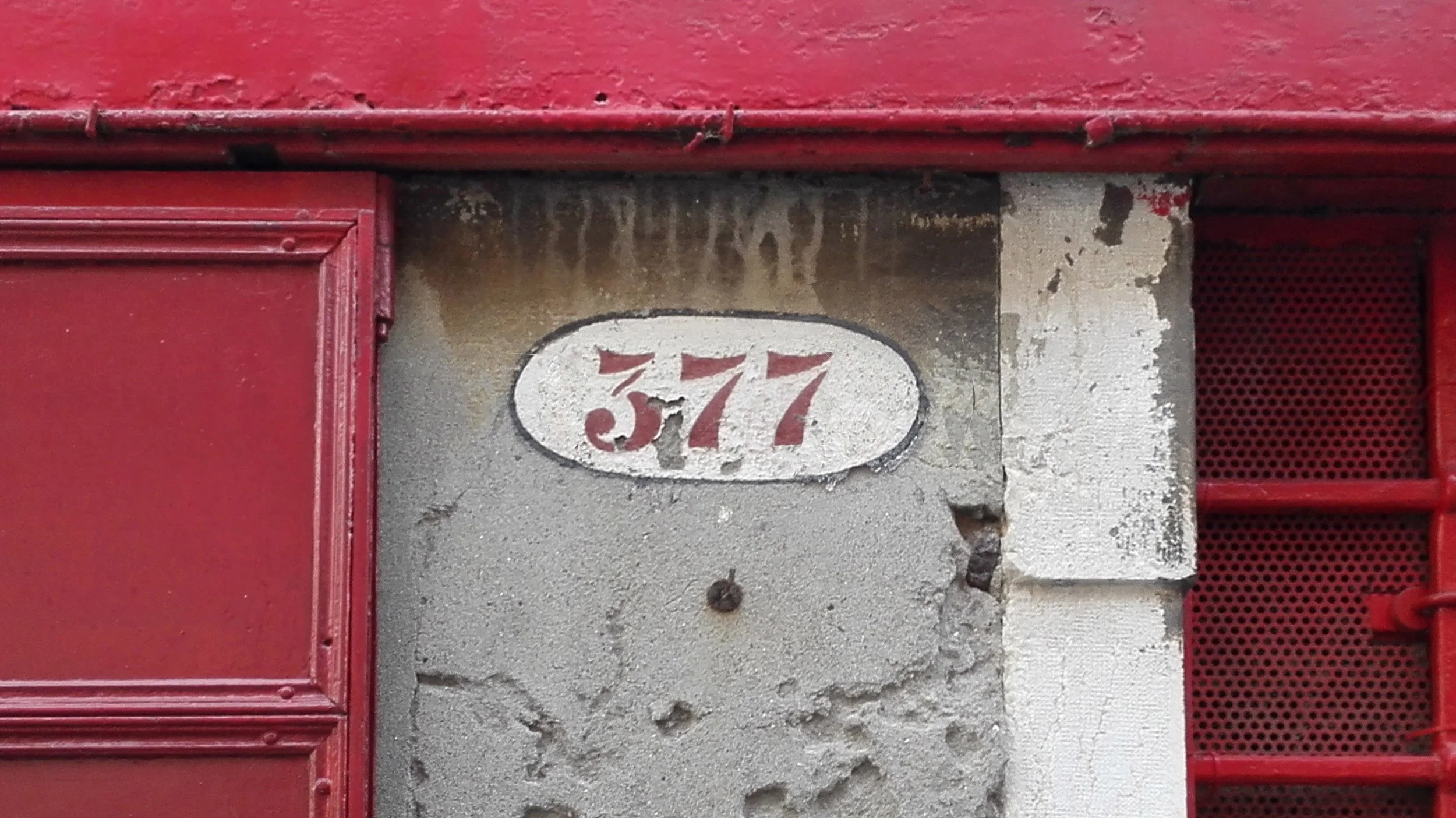
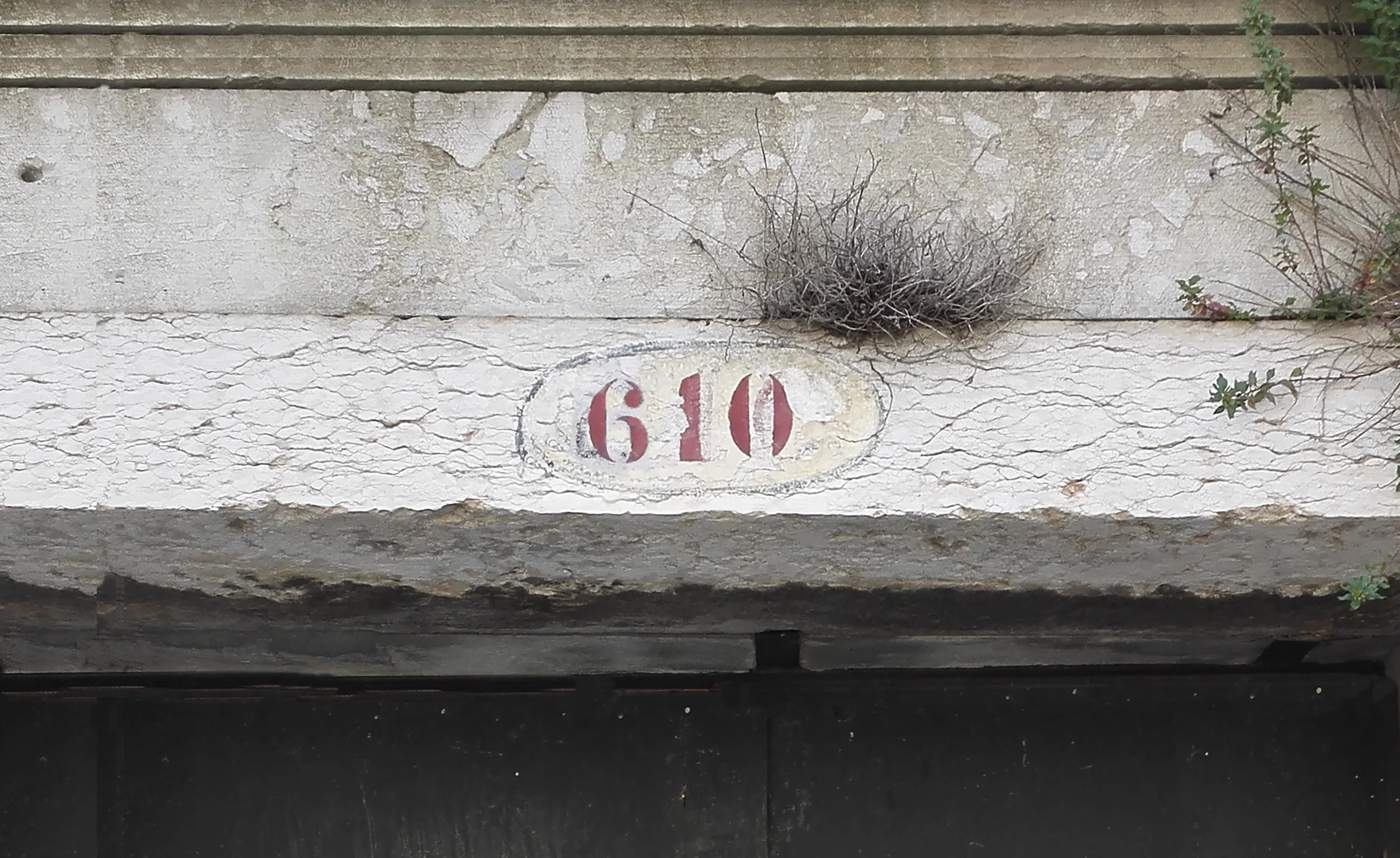
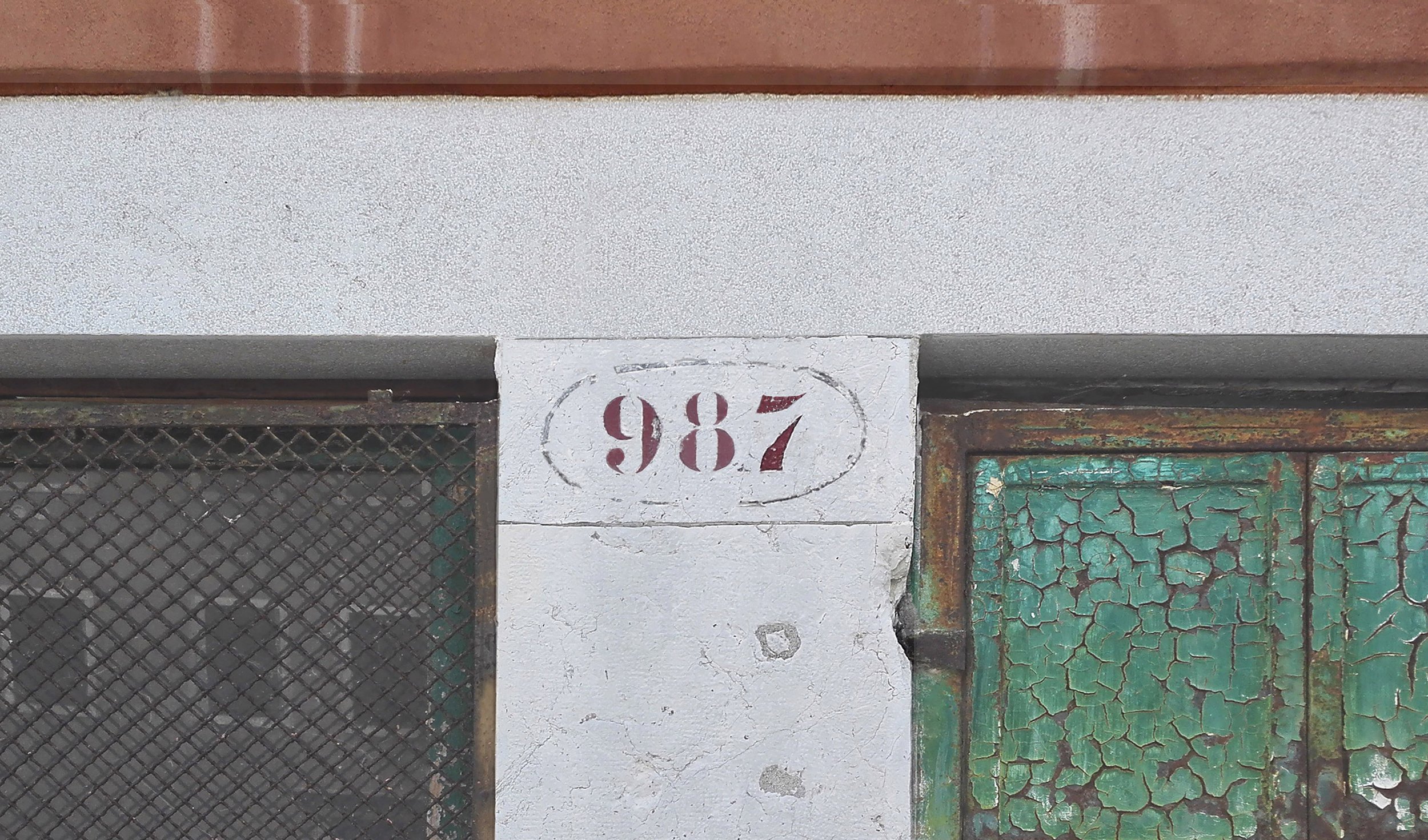
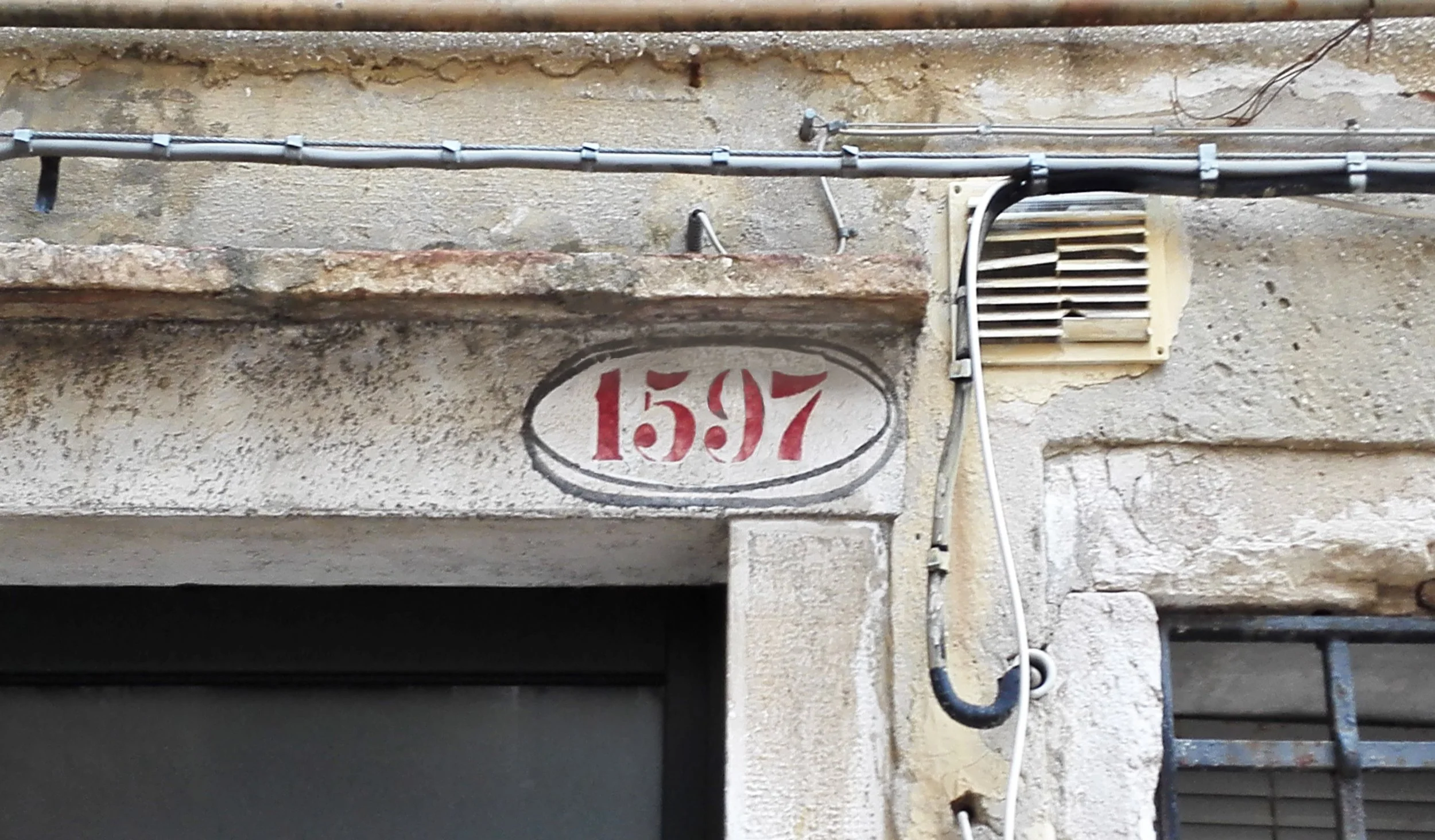
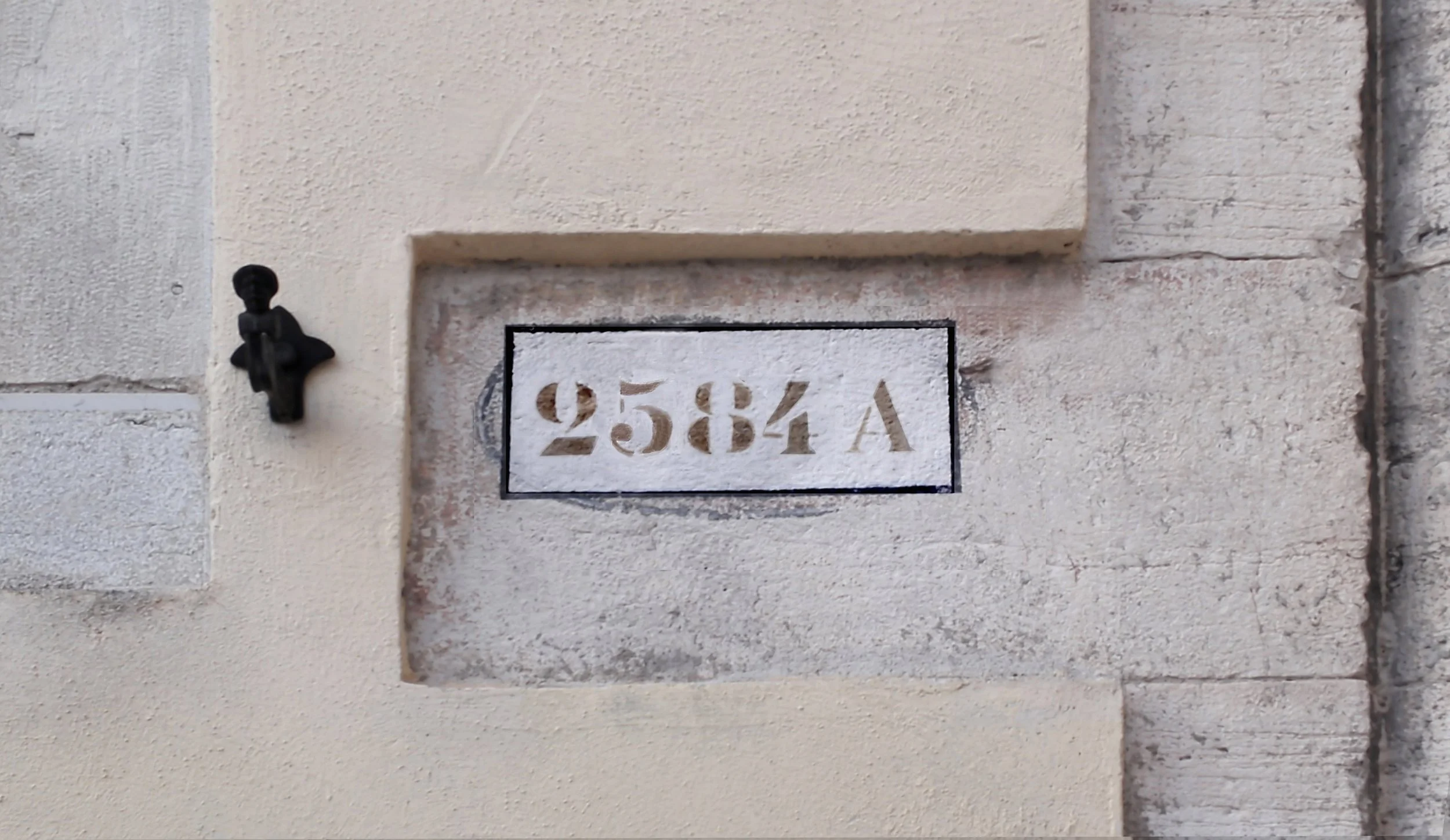
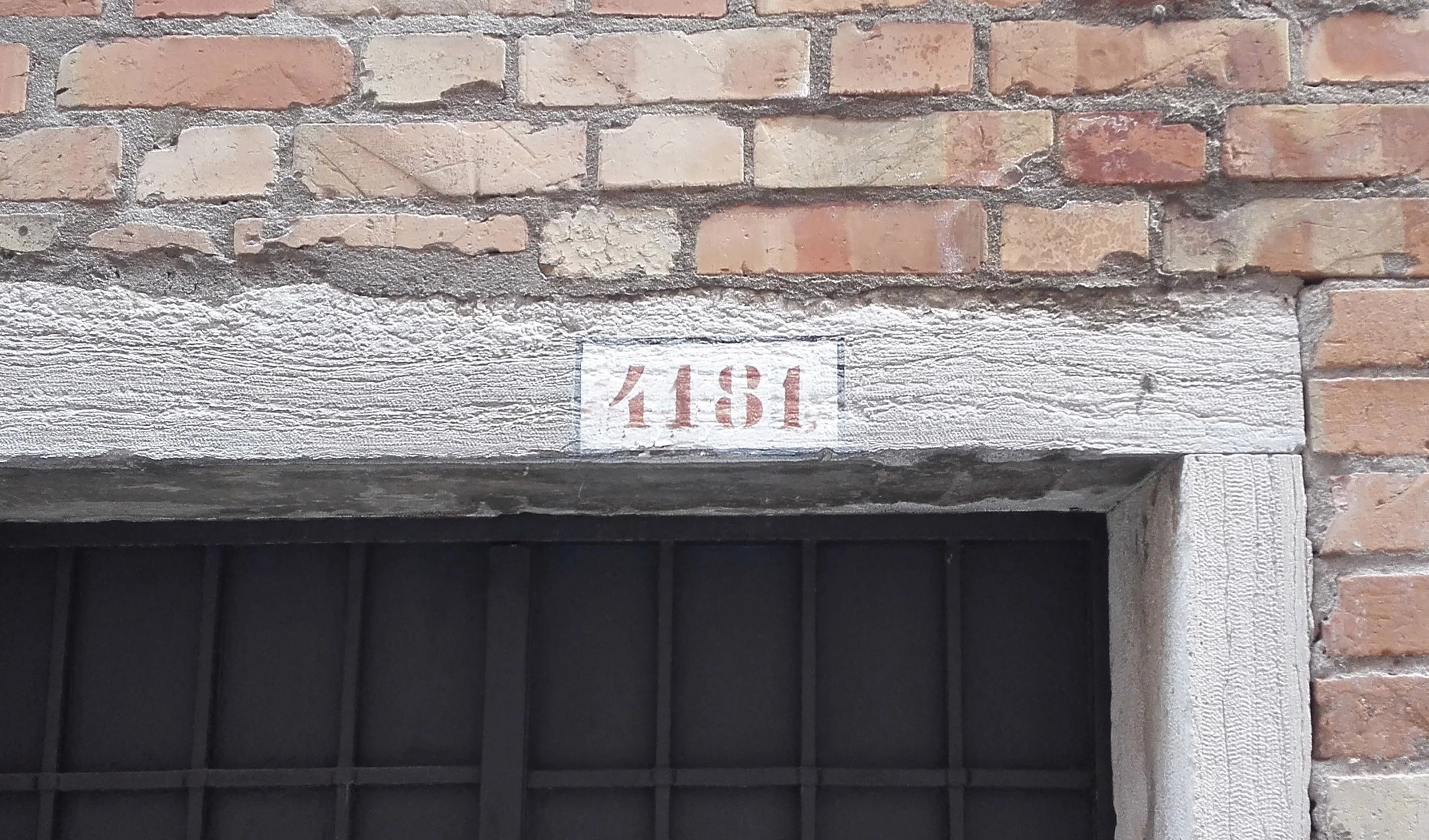
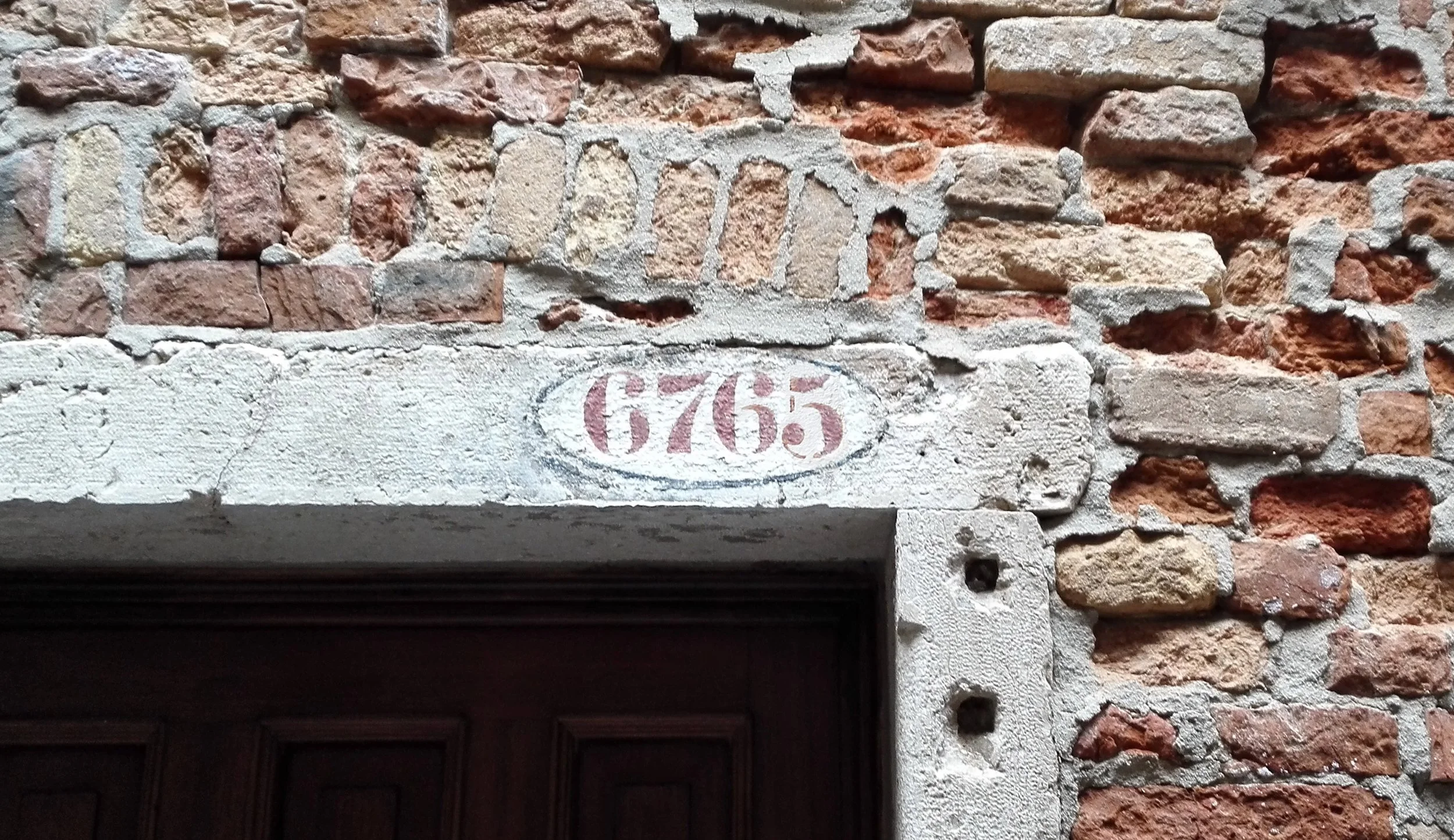
The fixed progression of the Fibonacci sequence extends beyond a numbering system or a mathematical pattern. It is evident in growth forms, structures and formulae in nature, architecture, art, music, science, economics and digital software. The ratio of the Fibonacci sequence is 1.618, which is also the basis for ‘The Divine Proportion’ or ‘The Golden Ratio’ used within the arts for centuries.
The Fibonacci sequence is, therefore, a universal method of understanding and analysing the logic and structure of nature, our perception of it and its application to human invention.
On the other hand, the Venetian street numbering system (while less universal) is no less logical, being purposely developed and attuned to the specific characteristics of the unique location.
Collecting and collating is a process central to my practice and is directly related to the notion of the flâneur.
Taken from a French word, meaning to ‘stroll’ or ‘saunter’, Charles Baudelaire advocated for the flâneur (or artist/poet) to explore city streets as a detached observer in order, to understand, respond and ‘find beauty in the ruin’.
More than just an aimless walker, a flâneur is defined as a highly perceptive person who wanders through a city, having no specific destination but completely immersed in the milieu. Baudelaire described the flâneur as a ‘connoisseur of the street.’
The concept of the flâneur was extended and developed in the late 1950s by the theorist Guy Debord, who introduced the idea of dérive - a technique of ‘transient passage’, whereby an individual abandons usual activity to enable spontaneous response and engage in ‘playful constructive behaviour’.
Venice is the ultimate paradise for the flâneur and actively encourages dérive by leading one to get lost, encounter and ponder. For a flâneur, getting lost is not an inconvenience it is the goal, and for me a necessary process for finding Fibonacci.